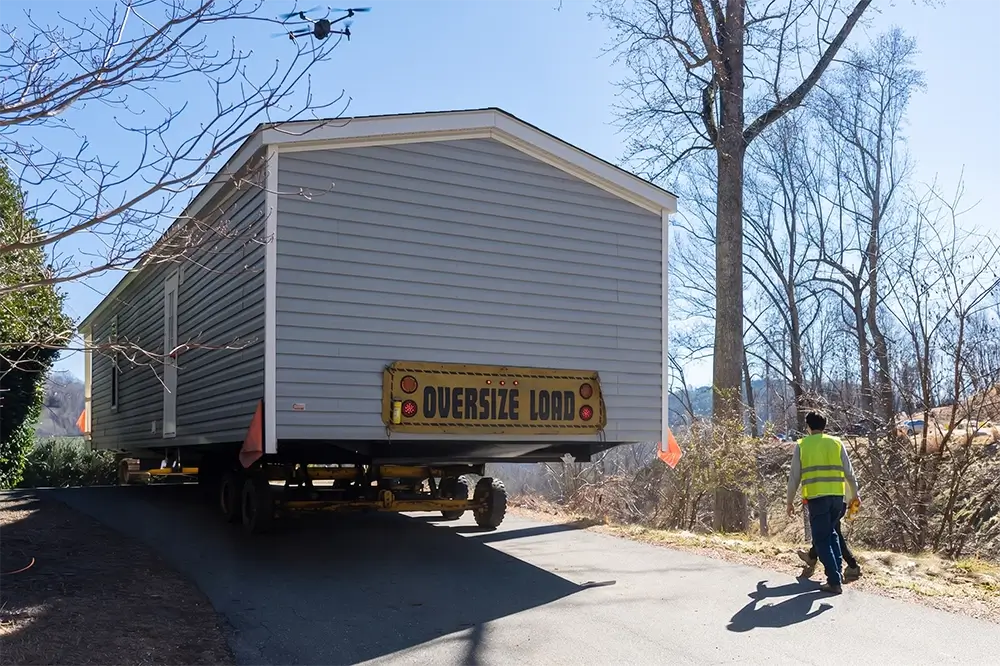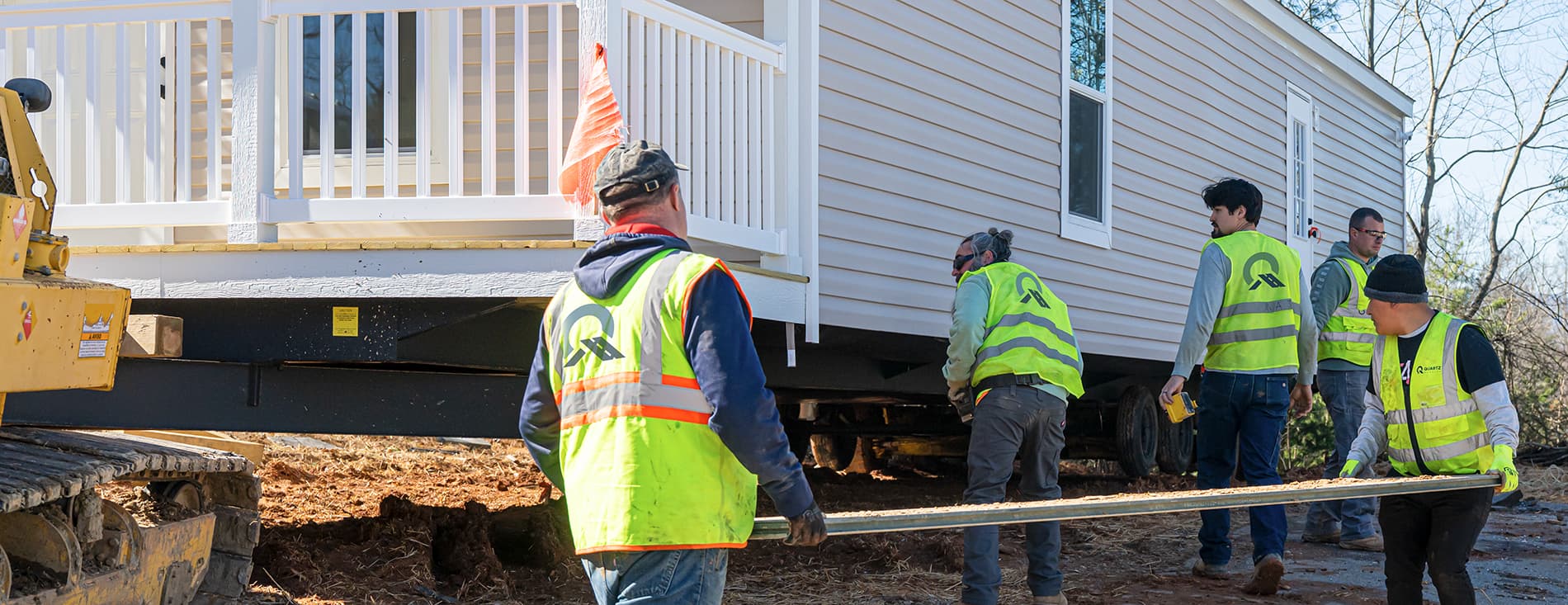
The cost to install a manufactured home in North Carolina or South Carolina is determined by the work required to take that particular home and site through installation and, for a turn-key project, to occupancy.
For most projects, that cost is made up of several major components:
- Site preparation, such as clearing, grading, drainage, footers and access
- Transportation and setup of the home
- Utility work, including electrical, plumbing, HVAC, water, sewer or septic
- Completion work, such as decks, skirting and trim
- Permitting, inspections and project coordination
The amount of work within each category can vary considerably from one property to another. A manufactured home going onto a prepared community pad with utilities already available requires a different scope than a home going onto a property that needs demolition, grading, new footers, utility work or other site preparation.
Quartz Transport & Install specializes in turn-key manufactured home installation, coordinating the process from site evaluation and preparation through transport, setup, utility connections, finishing, inspections and Certificate of Occupancy. The cost of a QTI turn-key installation is therefore developed around the complete scope required for the individual project.
Here is what goes into that cost and what can change it.
1. Site Preparation
Long before a manufactured home is set, the site has to be ready to receive it.
Site preparation can be relatively straightforward when a home is going onto an existing, prepared pad. Other sites require significantly more work before transportation and installation can begin.
Depending on the property, that work may include:
- Demolition and removal of an existing home or structure
- Tree removal and clearing
- Grading and dirt work
- Drainage
- Driveway or roadway work
- Footers and foundation preparation
- Utility trenching
- Septic work
- Well work
- Other preparation required by the site or local jurisdiction
QTI evaluates these conditions before developing the full project scope.
During a site evaluation, the team documents items that can affect both site preparation and installation, including grade, utility locations, septic and water conditions, access, property constraints and the work necessary to make the site ready for the home.
The team may also document quantities and measurements needed for estimating, such as fill, stone and utility distances, along with site elevations and other conditions relevant to the installation.
The result is that site preparation is based on the property that actually exists—not simply the size or price of the manufactured home.
2. Transportation and Site Access
Getting a manufactured home to the property is another part of the installation cost.
Before transportation, QTI evaluates the route to the site and the conditions the transport crew will encounter along the way.
That planning can include:
- Distance from the pickup location to the installation site
- Number of home sections being transported
- DOT routing and permitting
- Escort requirements
- Bridge or roadway restrictions
- Lane width
- Overhead obstructions
- Trees or other route obstructions
- Driveway and site access
- Space available to maneuver and position the home
Transportation requirements also differ by home type. A single-wide is transported as one section, while a double-wide requires multiple sections to be transported and positioned at the site.
For dealers, community operators and developers installing multiple homes, transportation planning may also involve coordinating the timing and staging of several homes so that delivery and installation can proceed efficiently.
3. Manufactured Home Setup
Transportation gets the home to the property. Setup installs it.
The setup scope depends in part on the home itself and whether it is a single-section or multi-section home.
For a manufactured home installation, this work includes positioning the home and completing the installation required to secure it properly on the prepared site. Multi-section homes require the individual sections to be positioned and joined as part of the setup process.
A double-wide therefore involves a different transportation and setup scope from a single-wide.
The site matters here as well. Access, grade, soil conditions, space for equipment and how the home can be positioned all influence how the installation must be planned and executed.
This is why QTI evaluates both the home and the property before finalizing the installation plan.
4. Electrical, Plumbing, HVAC and Other Utility Work
After the home is set, additional work is typically required before it is ready for occupancy.
Depending on the site and existing infrastructure, a project may require:
- Electrical connections to the home
- Electrical connections to HVAC equipment
- Plumbing connections
- HVAC installation and completion
- Public water connections
- Well connections
- Public sewer connections
- Septic connections
- Electrical connections associated with well or septic systems
The amount of utility work can vary substantially.
A home installed on a pad where the necessary services are already located nearby presents one scope. A home on a property requiring longer utility runs, a new septic system, well work or other infrastructure presents another.
For a turn-key installation, QTI coordinates the applicable trades as part of the overall project rather than treating the home set as the end of the installation.
5. Decks, Skirting and Finish Work
A manufactured home can be transported and set without being complete.
Additional work may still be required to take the project through inspection and occupancy.
Depending on the project, QTI’s turn-key scope can include:
- Decks or entry structures
- Vinyl skirting
- Masonry skirting
- Interior trim-out
- Exterior trim-out
- Final utility work
- HVAC completion
- Cleaning
- Other finishing work required by the project
The specifications matter.
A small entry deck is a different scope from a larger deck. Vinyl and masonry skirting require different work. A project with additional exterior or finish requirements will likewise differ from one requiring only a more standard completion package.
These details need to be included when comparing installation proposals.
6. Permits and Inspections
Permitting and inspections are also part of a complete manufactured home installation.
Requirements can vary by jurisdiction, so QTI’s process includes identifying the applicable local requirements for the property and coordinating the permitting and inspection process for turn-key projects.
That can include zoning and building permitting as well as inspections required at different stages of the installation.
QTI’s operating process tracks work through defined stages, including permitting, site preparation, delivery, installation, utility work, finishing and final completion.
A project is not treated as complete simply because the home has been delivered and set. For a full turn-key project, the work continues through the inspections and approvals required for occupancy.
Why Two Manufactured Home Installation Quotes May Be Very Different
When comparing manufactured home installation costs, the total price only tells part of the story.
The more important question is:
What is included in that price?
One proposal may include transportation and setup. Another may include demolition, site preparation, transport, setup, utility connections, decks, skirting, permitting, inspections and project management through Certificate of Occupancy.
Those are not equivalent scopes.
The same applies to individual components. One property may already have a prepared pad and utilities. Another may require significant work before the home can even be delivered.
Before comparing estimates, identify whether each proposal includes the same work, including:
- Site preparation
- Transportation
- Setup
- Permits
- Electrical
- Plumbing
- HVAC
- Water or well
- Sewer or septic
- Decks
- Skirting
- Trim and finishing
- Inspections
- Project coordination through completion
A cost that is excluded from the installation proposal may still need to be completed and paid for separately.
How QTI Determines the Cost of a Turn-Key Manufactured Home Installation
QTI’s process begins by defining the project in detail.
Before the site evaluation, the team gathers information such as:
- Site address
- Pickup address
- Home manufacturer
- Home type and dimensions
- Requested scope of work
- Whether the land is already developed
- Existing utility information
- Septic or well requirements
- Skirting requirements
- Deck requirements
- Available site or property information
The site evaluation then provides the field information needed to understand what the project will require.
QTI evaluates the site and transportation route, documents conditions, identifies the required scopes and uses that information to develop the project estimate.
For the trades involved in the project, the estimating process incorporates the specific scope identified during the site evaluation and applicable subcontractor costs.
Once the project moves into construction, a turn-key installation progresses through the required phases of the job:
Site Evaluation → Permitting → Site Preparation → Transportation & Setup → Utility Connections → Finishing → Inspections → Certificate of Occupancy
The objective is to identify the work before installation begins and coordinate those individual pieces as one project.
Why the Site Evaluation Matters to Installation Cost
An accurate estimate depends on knowing what is actually at the site.
Conditions that are not identified before work begins can affect scope, scheduling and cost later in the project.
That is why QTI’s site evaluation is more than a basic visit to confirm that a home will fit.
Depending on the project, the team evaluates and documents:
- Delivery route
- Property access
- Grade
- Grading requirements
- Utility locations
- Water and sewer conditions
- Septic conditions
- Site measurements
- Property constraints
- Soil conditions relevant to installation
- Trees and overhead obstructions
- Road or driveway requirements
- Foundation and footer requirements
- Other site-specific conditions
That information becomes part of the planning and estimating process for the installation.
What About Installing Multiple Manufactured Homes?
For manufactured home community owners and operators, dealers, developers and other organizations installing homes repeatedly, cost also has to be considered at the project or program level.
The work may involve multiple homes moving through site preparation, delivery, setup, utilities and inspections at different stages.
In these projects, sequencing matters. Homes have to be delivered when sites are ready, crews and subcontractors have to be coordinated, inspections have to occur at the appropriate points, and each home has to continue moving toward occupancy.
QTI’s turn-key model is designed to manage those individual scopes and schedules under a coordinated installation process.
For a community operator, that may mean replacing homes or filling vacant pads. For a dealer, it may mean moving sold homes through installation without requiring the dealer’s team to coordinate every trade involved after the sale. For a developer, it may mean managing the manufactured home installation scope across multiple lots.
Does QTI Offer Installation Services Without a Full Turn-Key Package?
Yes.
To begin evaluating a manufactured home installation, it is helpful to have as much of the following information as possible:
QTI focuses on turn-key manufactured home installation, but individual services can also be provided when a customer already has portions of the project covered.
Available scopes can include transportation, setup, site preparation and other portions of the installation process depending on the project.
What Information is Helpful For An Accurate Estimate?
- Property address
- Home pickup location
- Home manufacturer
- Home dimensions
- Single-wide, double-wide or other home configuration
- Scope of services needed
- Information about existing utilities
- Information about septic or well systems, if applicable
- Site or survey information, if available
- Desired deck and skirting requirements
- Work that has already been completed at the property
The site evaluation can then be used to identify additional site-specific requirements and develop the full scope.
Getting an Installation Cost for Your Project
The cost of manufactured home installation is ultimately determined by the work required to take the home from its current location through a completed installation.
For a turn-key project, that means looking beyond the cost of transportation or the home set alone. Site preparation, utilities, permitting, finish work and inspections all have to be accounted for when they are part of the project.
Quartz Transport & Install specializes in coordinating those scopes as a single turn-key manufactured home installation, from early site evaluation and preparation through final inspection and occupancy.
For dealers, manufactured home community owners and operators, developers, organizations and other customers planning installations in North Carolina or South Carolina, QTI can evaluate the home, property and required scope to develop a project-specific estimate.
FAQ
How is the cost of manufactured home installation determined?
Manufactured home installation cost depends on the home, property and scope of work required. Relevant work can include site preparation, transportation, setup, utility connections, decks, skirting, permitting, inspections and other work required to complete the installation.
Is manufactured home setup the same as a turn-key installation?
No. Setup is one portion of the installation process. A turn-key installation can include site preparation, permitting, transportation, setup, utilities, finish work and coordination through final inspection and Certificate of Occupancy.
Does site preparation affect manufactured home installation cost?
Yes. The required site work varies by property. Depending on existing conditions, preparation may include demolition, clearing, grading, drainage, footers, driveway work, utility work, septic or well work and other site-specific requirements.
Does it cost more to install a double-wide than a single-wide?
A single-wide and double-wide involve different transportation and setup scopes. A double-wide is transported in multiple sections that must be positioned and joined during installation. Site conditions and the remaining work required for completion also affect the overall project scope.
Are utility connections part of manufactured home installation?
They can be. In a turn-key installation, the scope may include electrical, plumbing, HVAC, water, sewer, well or septic work depending on the property and project requirements.
Does Quartz Transport & Install provide turn-key manufactured home installation?
Yes. QTI specializes in turn-key manufactured home installation and can coordinate work from site preparation and permitting through transportation, setup, utilities, finishing, inspections and occupancy. Individual services may also be available depending on the projec